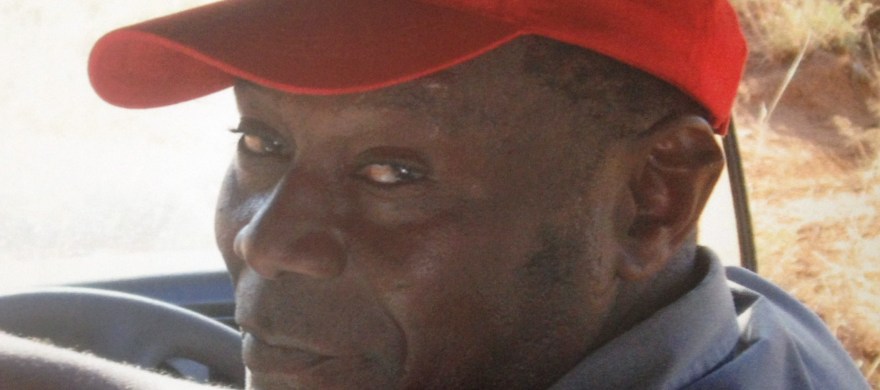
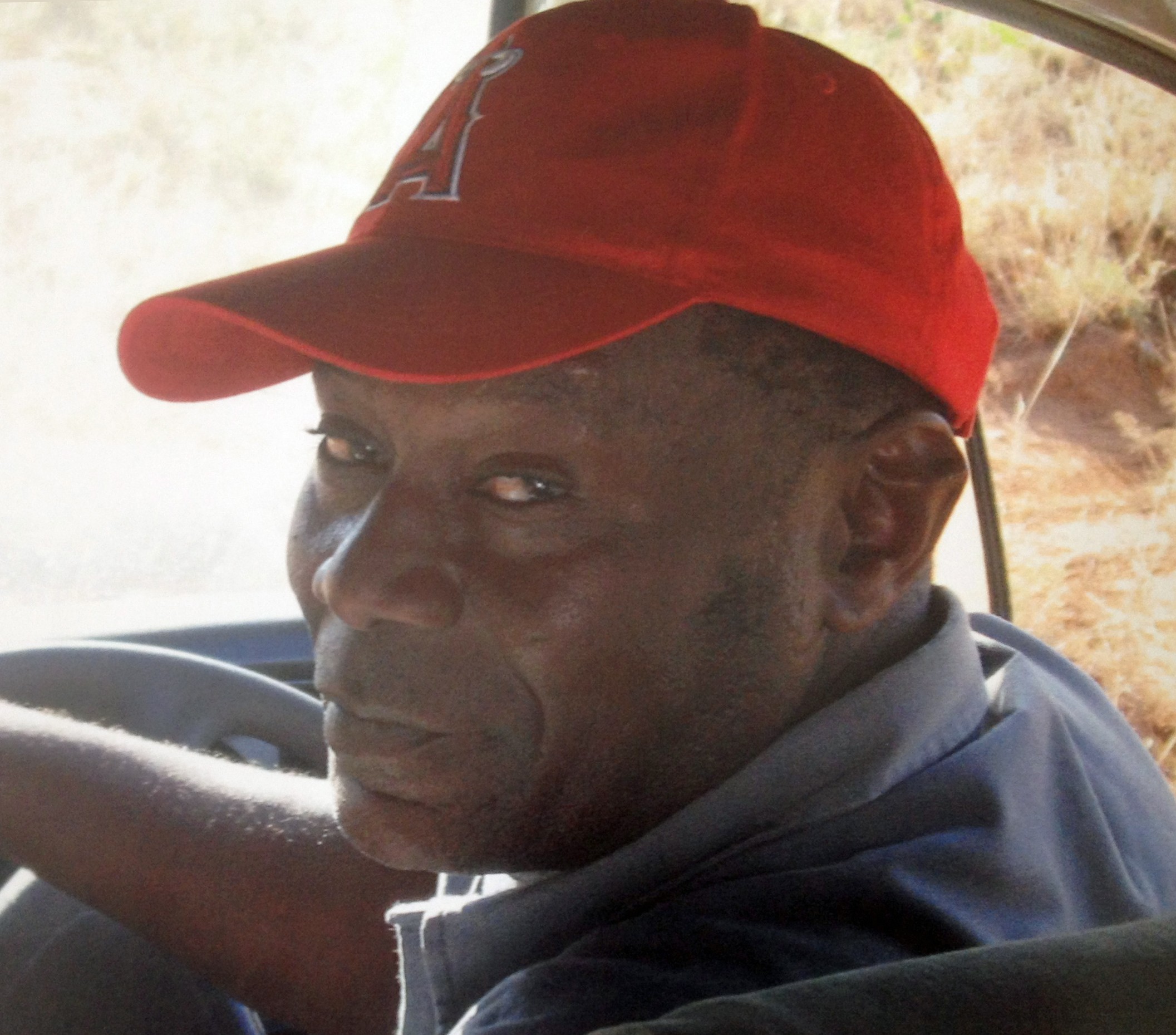
Peter Kamau behind the wheel in Kenya, East Africa, 2007. Photo: Allison B. Cohen
When I travel, I am extremely fastidious about unpacking. I don’t spend much time packing. I always do it at the last minute and rather haphazardly. But whenever I finally get to my resting point, be it a hotel or elsewhere, I am very precise about how I “set up” wherever I am going to be spending my time. (This is in direct opposition of how I keep my office, which has been described as looking like a frat house on 28th Street in Los Angeles.)
This unpacking and placing ritual became a lesson for me about the importance of keeping, honoring and protecting those things that we carry while we are away. It became a lesson for me about the value of an item–a possession, no matter how mundane or precious. It became a lesson for me on how to handle a mistake with integrity.
In 2007, I was in Kenya, East Africa on an 19-day safari. During this trip my traveling companions and I made many stops to various parks like the Lake Nakuru, Tipilikwani Camp, the Maasai Mari in the Northern Serengeti, the Amboseli Reserve and Samburu. We had one driver for all our destinations, Peter Kamau, from Nairobi.
It was at the Samburu Reserve where this story and its learning takes place.
I have a habit of befriending bus drivers and all taxi drivers–that is how I know nearly every driver I’ve met in Washington, D.C. has children in Ivy League schools. And I befriended our driver Peter on this African trip as well.
Peter always wore an Anaheim Angels baseball cap. A gift, he said, from some earlier tourist. His other attire was a neatly pressed army green button down shirt and pleated khaki pants. He spoke infrequently but softly, gently and he reminded me of Morgan Freeman in the 1997 film The Shawshank Redemption.
Our accommodations at Samburu, along a beautiful melted chocolate river, were beautiful tents lined in a row erected with richly polished wood. Elephants routinely walked in between our various tents and as a result, we had to be escorted to and from our tents by local tribesman for our safety.
Upon arrival, I unpacked my few things and hung my Tilley Hat on one of the interior polished wooden posts framing the tent. A Tilley Hat is a lightweight brimmed hat that keeps you cool, keeps you dry and even has a hidden mesh pocket in the hat’s crown, where you can, say, hide cigarettes if you’ve told everyone you’ve quit and you haven’t; or, for most others, the pocket is a secret hideaway for cash or identification. My Tilley hat is very special to me and I’ve had it a long time.
At this camp we had early 6 a.m. safari drives daily to witness giraffes running at daybreak and elephants playing and splashing one another in the Chocolate River. We’d return for breakfast, rest and then would go out at least two or three more times during the day on “drives.”
Peter, in his quiet way, had quite a sense of humor. After one very long particular day, he was in on a joke with other safari personnel back at camp. Riding along the very bumpy, dusty “road” on our way back to camp, Peter received a radio call on his walkie-talkie. We could not make out what the full discussion was, but the outcome was this: “Friends, we have to turn around and double back from where we just were. Last night’s storm has left our “road” back to camp impassable.” (This was plausible because anytime in rains in Kenya the roads completely wash out.)
Only 10 or 15 minutes from camp and having been out for nearly three hours, this meant we had to retrace our steps and would not get back to camp for at least over an hour more. Every passenger in our white Volkswagon van groaned and sat back for more bumps in the road with no safari animals in site.
About 30 minutes later, Peter starting quietly chuckling to himself. . . and then laughing some more. In the short distance we saw the joke: a beautiful table with chairs, lit by candle awaiting our arrival.
“Hah!” Peter said. “It was a joke!”
As we neared the site and emptied out of the van, there was an elaborate setting, again along the bank of the Chocolate River, and a spread of cheese, fruit, cold cuts, fresh bread and welcoming red and white wine. It was as if we were contestants on “Survivor” and this joyful spread had been prepared for us by scheming producers.
I tell this story to illustrate that Peter, who played along well with the joke, first uttering his own frustration quietly under his breath at the thought of retracing an hour or more of our journey, to show that while he was quiet and stern he had great laughter and sense of humor.
We stayed at this camp for a few days and then it was time for most of my companions to go home, mostly to the United States but some to France. A handful of us, however, were continuing on safari to venture further north to places like Amboseli at the foothills of the Kilimanjaro.
So on the morning of some of my companion’s departure, we loaded up in the van for one last safari en route to the area’s one plane airstrip to say goodbye and then we would continue on to Nairobi before heading north to our next stop.
Those departing were thrilled to have one last safari ride, with the hope of catching another giraffe, more elephants playing or lions sunning themselves in the brush.
After 30 minutes into this last ride, I realized I had left my Tilley Hat were I had so neatly placed it back at camp: on the wooden post in my tent. I didn’t say anything to Peter, but my companion did.
“Peter, my friend,” Allison has left something important to her back at camp.
Peter, kept driving, but you could see is consideration of this error of mine. He radioed back to the camp; asked workers there to see if indeed the Tilley was hanging on its post and was messaged back, indeed it was.
He stopped the van and turned around to speak to us all.
“Friends,” he said. “We must go back to camp. We must turn around. Something important has been left there and it must be retrieved.”
Everyone groaned. I was mortified at stopping their last safari and pushed my way to the front of the van to the driver’s seat to speak to Peter.
“Peter, we cannot go back,” I said. “This is their last safari. It’s OK. I can get another Tilley Hat another time.”
But Peter had already made up his mind. He turned the van around and started to head back.
I truly felt like hell. My companions were annoyed and upset. Their last safari ride had been cut short–no actually completely circumvented–by my carelessness and my Tilley Hat.
I confessed.
“It’s my hat,” I said. “He’s going back to get my hat.” After all these days with these same companions they knew my hat well. I had worn it every day.
Needless to say, they were not happy with me. One woman, was really upset. I really felt awful.
We finally arrived back to the camp and I ran though the tents like hell trying desperately to remember which tent I had stayed in. They were unmarked and were identical in appearance. I peered into one. Nothing. I peered into another. No hat. I finally found my tent and yanked that Tilley Hat from its post.
And then I ran as fast as I could on my way back to the van, hoping some lost time could be re-found so my friends could finish their safari pleasantly.
Intercepting my sprint en route, however, was Peter.
He took me by the shoulders with his two large hands.
“You are to walk slowly and peacefully as if nothing has happened,” he said. “You are to hold your head high and not in shame. Do not ever run to show your shame or from your mistakes.”
I took a deep breath and did as Peter asked, walking back with as much integrity as I could muster having ruined everyone’s last hours in Africa.
I got into the van. Peter crawled into the driver’s seat. And then he turned around to all of us and said: “You shall never speak of this again. What’s done is done.”
We rode after that mostly in silence. And then we said goodbye to those departing at the airstrip with hugs and exchanges of phone numbers.
That same night, we stayed at a hotel in Nairobi where a very large, highly organized presidential political rally was being held in one of the hotel’s outdoor grassy courtyards. I discovered the rally by accident, but chose to stay as a spectator. At that time, I did not know how important that rally was, as Kenya would unravel with political and ethnically motivated unrest just seven months later in December 2007.
Only from home could I read of the 53, including children, that were locked and burned alive inside a church. Another 40 people were shot or killed by machete in Nairobi. Protests were rampant over the election’s results and police shot hundreds of demonstrators.
By January 2008 the death toll was 1,300 with 600,000 people displaced throughout Kenya.
Alarmed, I reached out to our guide on the safari via email and heard back from him. He was safe. I asked about Peter. He said he did not know. He had not seen Peter since the unrest began.
In a very short while, Peter had taught me how to show honesty and integrity in the midst of a mistake and that we often toss out what is broken or repurchase that which is lost instead of repairing or searching for the things we carry.
I then wrote to my wise friend Peter at the Nairobi post office box address he had given me.
I never heard back.
 "Is it safe to be on this floor of the building?"
Sounds like he did what a good father might do. I like the man. As A father myself, I’m glad he did his job. I think after 7 years I ‘d do a due diligence check again on Peter. Either outcome I think you’ll be able to put Peter to rest.