Annetta and “Mrs. Clarice” ~ On Donald Sterling’s Racist Remarks
ablastname
Posted on April 28, 2014
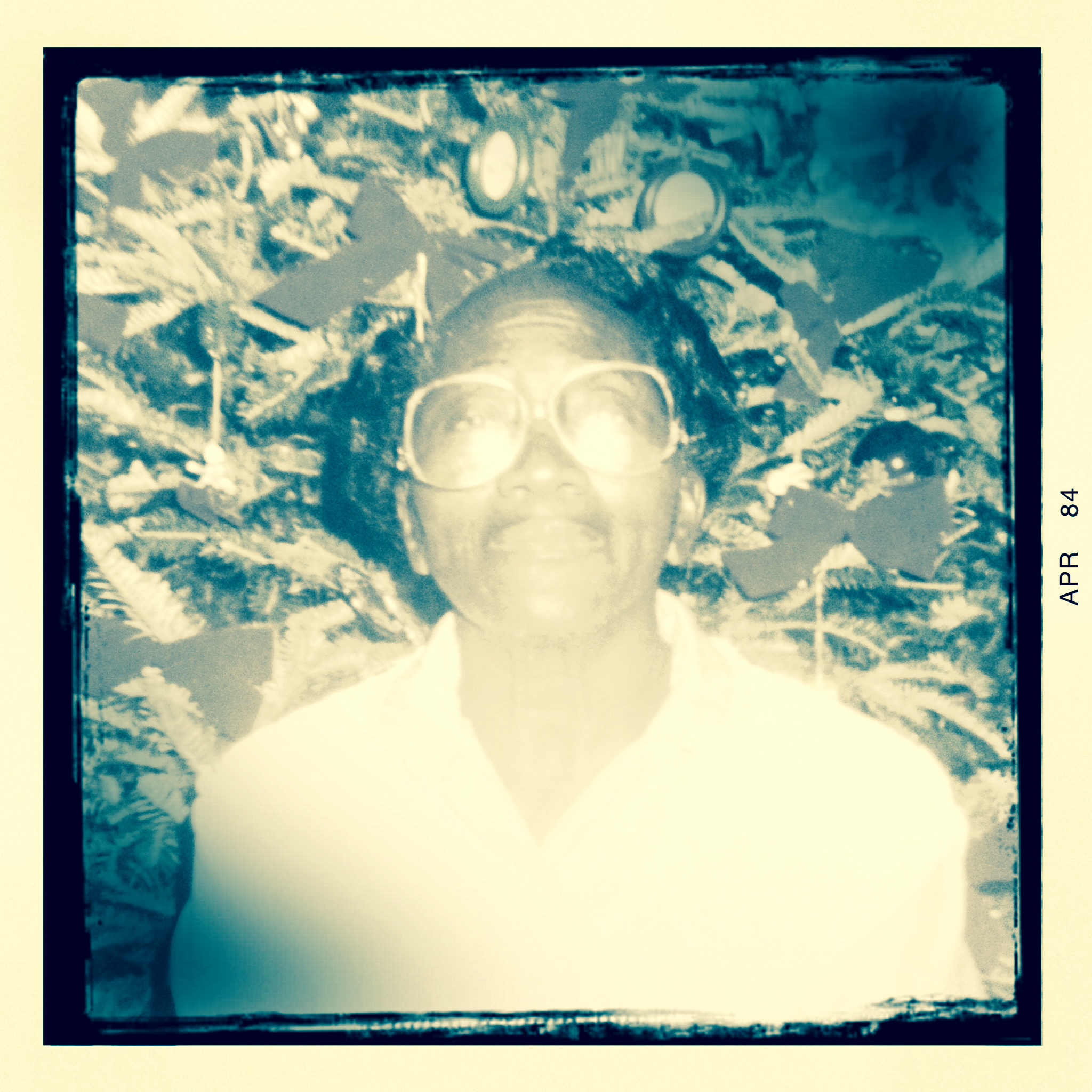 My brother and I approached the tall white-steepled church–large and looming as one might expect in the middle of the deep South–its starkness brilliantly contrasted against a Carolina blue sky. In the church’s foyer, a group of mourners gathered–mostly elderly. Their children congregated there too–young folks–not slowed with age yet, but certainly leaden down by too many deep-fried hush puppies and sweet tea.
My brother and I, Southerners transplanted to California–me to the desert and he to the ocean–entered the church as mournful, beautiful strangers. It was our grandmother this group had come to eulogize. My recollection then–at 25–was the church housed at least 100 pews to the left and to the right. I don’t know if that is the case today, as with age one’s field of vision diminishes.
But on that early spring day, inside that big white Southern Baptist Church, there were a sea of heads–mostly golden of my grandmother’s sisters–Theresa, Cleta, Ruby, Hazel, Leona and brothers: Charlie and Willie, the baby at 70.
Because of family politics, some sat together–some apart–but the pew in the front of the church remained empty awaiting the “California Children” and my grandmother’s other immediate family. Now, passed the obligatory gentlemanly handshakes and hugs from excessively powered and perfumed second cousins we hardly knew, we crossed the foyer into the sanctuary.
To our left, my brother and I noticed two figures hunched quietly in the last pew of the church.
Annetta. Oh Annetta! A familiar face! There she was, in the corner, in the back, unnoticed, huddled and grieving. Her daughter, Katherine, beside her for comfort. Annetta was my grandmother’s housekeeper. She diligently worked for her, changing sheets and ironing laundry, for over 40 years. Some say Annetta even raised my mother–Jean Estelle and my uncle, William–while my grandparents, “Doc” and Clarice Sink, ran a small appliance shop on tiny Salem Street.
My brother and I immediately plucked Annetta and Katherine from their dark corner, their protests muffled by our insistence. Annetta belonged with us in the front of that church in the first pew. She was my grandmother’s employee, yes, but after 40 years, she was like a grandfather clock chiming through my grandmother’s modest farm house: always dependable and always there, reverberating the walls of the house with her gentle, restrained laughter. She was a beautiful old black woman who protested if you did not eat your green beans and corn succotash (also served as the main meal called “dinner” at noon) and only referred to my grandmother as “Mrs. Clarice.”
I hadn’t cried about my grandmother’s death until I saw Annetta. My grandmother had lived a long and happy life. But now, I sobbed seeing Annetta–a figure so prominent in my grandmother’s day-to-day existence–there now alone without her. I did not wonder then, but I do now, what others in the church that day thought of our revised placement of Annetta within the church’s seating chart and how the “California Children” had cheated the South’s racial hierarchy, where blacks sit in the back and those with golden hair assume a front row seat.
The color of Annetta’s skin was irrelevant to my brother and me. But to those gathered at the church and to Annetta, segregation was still not only comfortable but customary in 1987. Annetta, even at that time, felt that was were she belonged. On a subsequent visit to my family’s “homeplace”–as they call it–race, as usual became a topic of conversation over pickled cucumbers, Tommy’s barbecue and pimento cheese sandwiches. Uncle Charlie said: “That Murder She Wrote show really has gone down-hill. Too many “niggers” on that program to be any good.”
Another Southern relative of mine–senile, incontinent and aged somewhere in her 80s–chimed in: “I can’t believe they let “coloreds” into Wake Forest. They’ve even got a “nigger” football coach now. I’m going to call the Dean myself and tell him there’ll be no more money donated from Mrs. Ruby H. Boyles.” Over 50 years have passed since Martin Luther King’s wake-up call to this nation, his “I Have a Dream,” speech. From that speech on Washington’s Mall in 1963, legislation has been created telling us our rights as humans are all equal. We now have our first African-American president.
But still, in small Southern towns of North Carolina, for example, blacks are still “niggers” yet conveniently revered on the parquet floor of the “Dean Dome.” That’s the case with Clippers owner Donald Sterling’s comments of racism released over the weekend. “Niggers” are those with whom you cannot associate, but it’s damn fine if they make you a boatload of money. The NBA is composed of 80% African-American players. Sterling’s comments might as well be from a Southern plantation owner profiting from the work of slaves.
While equality of races is somewhat better today, there sill remains a more muffled variety silently percolating under a facade of political correctness, as Sterling’s comments prove. What about that inner voice that whispers “Jew,” “spick,” “faggot,” when someone not of like color, gender, or religious or sexual orientation cuts you off on the freeway or takes away your well-deserved promotion or freshman spot in the Ivy League?
A neighbor of mine, whom now is a major Los Angeles philanthropist, never admits her prejudices, she just merely whispers them. “There’s too many blacks now on Larchmont Boulevard,” she told me once, while whispering the word “black” while cupping her hand around her mouth–as if this quieter version of racism would somehow diminish its potency.
When I was in high school living in California, my Southern father told me if I ever brought home a “nigger” as a date he would shoot him first and shoot me next. And he meant it. Racism is alive and well still in the South and in the South of California.
Annetta joined my grandmother just two months later that spring.
 "Is it safe to be on this floor of the building?"